The gap
Many community centres, neighbourhood houses (buurthuizen) and care settings already offer social activities such as coffee mornings, crafts or games. But few offer physical activity adapted to older adults or to people with mental health challenges. Regular fitness classes are often too demanding, too expensive or too far away for these groups.
Why it matters
Inactivity weakens the body and increases the risk of falls, and according to the World Health Organization, physical inactivity rises after the age of 60. At the same time, loneliness and isolation affect mental health: the WHO estimates that social isolation affects up to one in three older adults, and that people who feel lonely are twice as likely to develop depression. In the Netherlands, about one in ten people aged 15 and over feel strongly lonely, and around three in ten feel lonely to some degree (CBS).
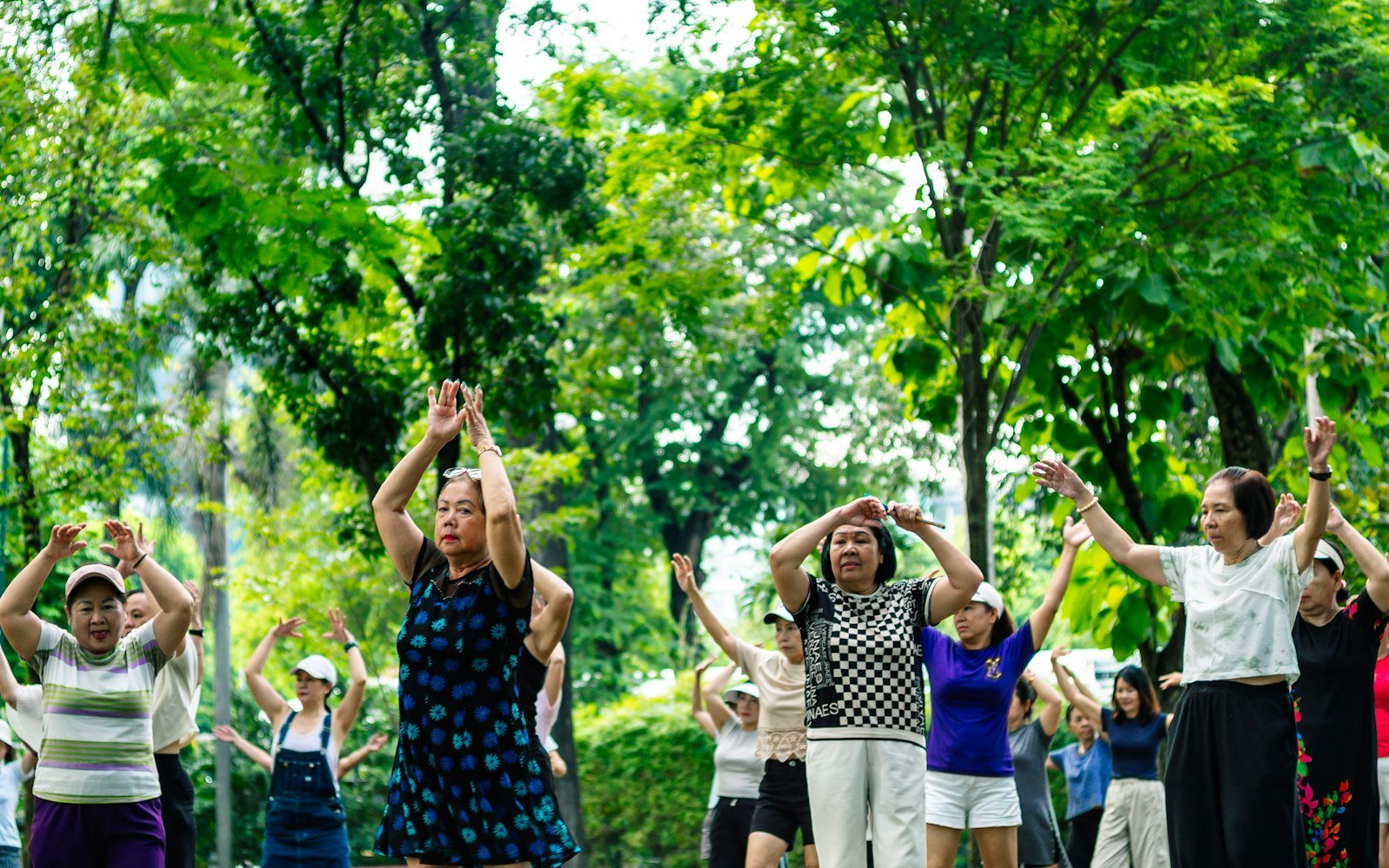
Movement in a group helps with both at the same time: the body gets stronger, and people meet each other.
Two target groups
- Older adults – keeping mobility, balance and independence in daily life.
- People with mental health challenges – gentle movement and calm breathing can support wellbeing: they may help reduce stress and anxiety, improve sleep and mood, and offer a safe, structured moment in the week.
Yoga can support wellbeing, but it is not a therapy or a medical treatment. That is why this project always works alongside care workers and health professionals, never instead of them.
The approach
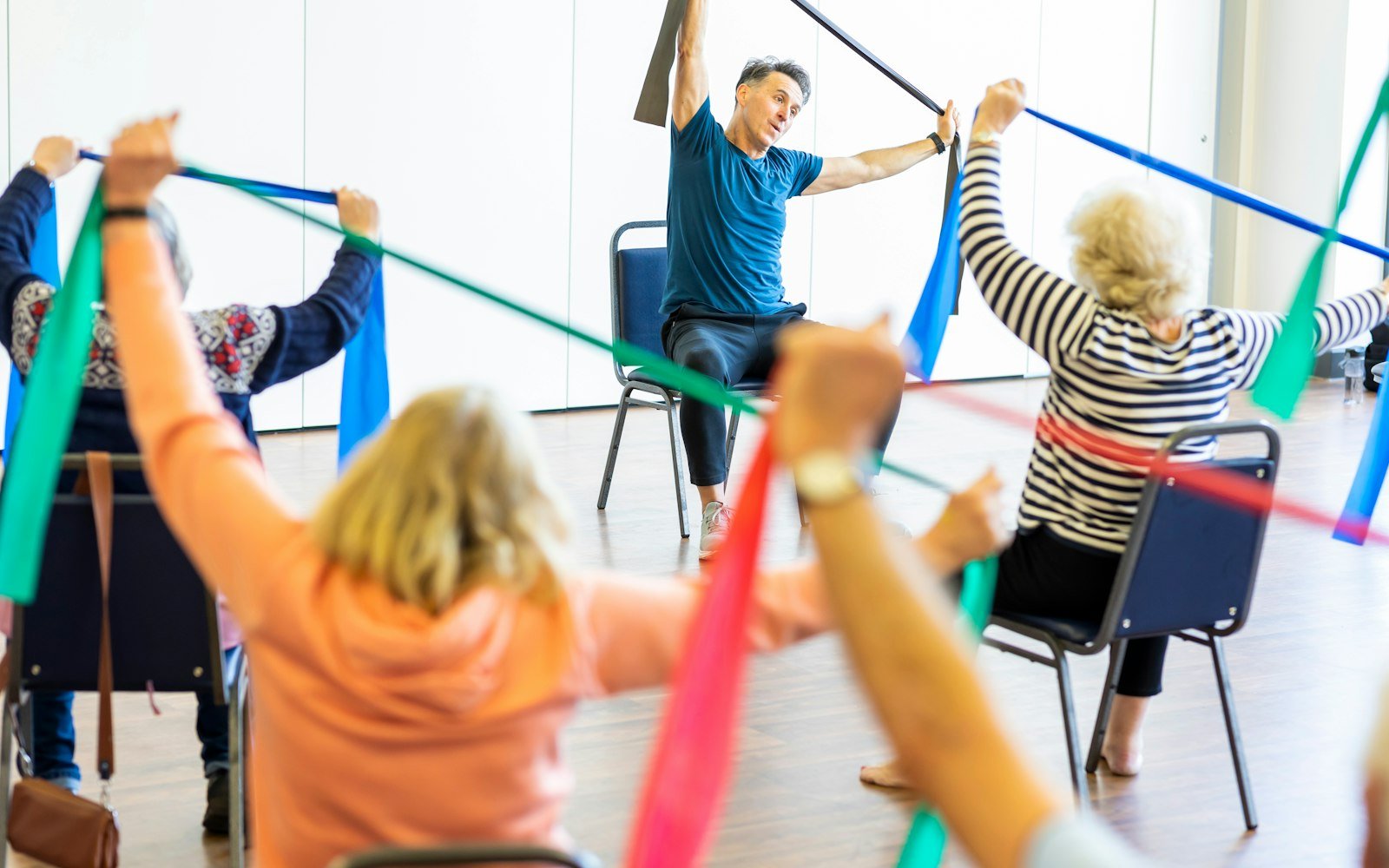
Instead of asking people to go somewhere new, the sessions come to places they already know and trust. The sessions are low-threshold:
- small groups
- chair-based
- no experience needed
- affordable
- adapted to each person
Working together
The project aims to complement what community centres, care workers and health professionals already do, not to replace it. It fills a gap in the existing network, so that gentle movement becomes one more part of the support people already receive.
Let’s work together
Are you part of a community centre, a neighbourhood house, a care organisation or a support group, and would you like to offer gentle yoga to the people you work with? Read more on the For community centres page, or get in touch – I would be happy to talk about what could work for your group.
Sources
- World Health Organization – Physical activity (fact sheet)
- World Health Organization – Social connection linked to improved health and reduced risk of early death (2025)
- CBS – 1 op de 10 mensen voelt zich sterk eenzaam; al 5 jaar stabiel (2026)