
Blog

  • More Than Classes: Introducing the Samatva Podcast and Network

    More Than Classes: Introducing the Samatva Podcast and Network

    Welcome to the Samatva podcast

    Welcome to the Samatva podcast! In each episode I talk with professionals, care workers and community organisations about wellbeing, movement, ageing and mental health, and we share practical resources and experiences that you can use in your own work and life.

    The bigger idea: a service behind the service

    Samatva Yoga doesn’t only offer classes. It also wants to build a connection point between people and organisations working in the same field: yoga and movement teachers, care workers, therapists, community centres and support services. Not just physically, but also online.

    What the network is for

    • Matching needs and offers – communities and centres can share what they need, and professionals can offer their skills or find work.
    • Sharing knowledge and resources – a place to exchange solutions, tools, training and good practices.
    • Supporting each other – no professional can do everything alone.

    An example from my own practice

    As a yoga teacher working with people with mental health challenges, I may meet situations or conditions I don’t feel prepared for. In that case, the network gives me two options:

    • Referral – I can ask a colleague with the right experience to take over that group or setting.
    • Learning – I can ask a more experienced professional to train, mentor or advise me, so I can grow and handle it myself next time.

    Why this matters

    It keeps the quality and safety of care high, prevents professionals from working in isolation, and helps communities get the right support faster.

    Join the conversation

    Are you a professional, an organisation or a community centre working with wellbeing, movement, ageing or mental health? Whether you would like to be a guest on the podcast or become part of the network, you are very welcome. Get in touch – I would love to hear from you.
  • Samatva: The Balance at the Heart of Yoga, and Why I Chose This Name

    Samatva: The Balance at the Heart of Yoga, and Why I Chose This Name

    The setting of the Bhagavad Gita

    The story of the Bhagavad Gita takes place on a battlefield, Kurukshetra. The warrior Arjuna is about to fight, but he is overwhelmed by doubt and sadness and lets his bow fall. His charioteer is Krishna, who in that moment becomes his teacher. Their conversation is the Gita.

    The teaching of samatva

    In the second chapter, Krishna tells Arjuna to act with a steady mind, the same in success and in failure, and says that this evenness of mind is yoga: samatvam yoga uchyate (verse 2.48). Yoga here is not about difficult postures, but about inner balance.

    What samatva means in daily life

    It means staying calm when things change, doing our best without being ruled by the result, and meeting good days and hard days with the same kindness.

    Why it fits gentle yoga for older adults

    Ageing brings changes: a stiffer body, less strength, sometimes pain or loss. Samatva invites us to accept the body as it is today, without comparing ourselves to others or to who we were. That is exactly the spirit of the classes: no competition, just balance.

    Why I chose this name

    I chose the name Samatva because it describes what I hope people find in my classes. For me, yoga has never been about touching my toes or holding a perfect pose, but about coming back to balance – in the body, in the breath and in the mind – whatever kind of day it is. Samatva reminds me, and I hope my students too, to meet ourselves with patience and kindness, exactly as we are today.

    The Samatva Yoga logo carries the same idea. The face is inspired by Jagannath, a form of Krishna traditionally shown with large, round, wide-open eyes. I changed it on purpose: from an expression that feels restless, unaligned and almost mischievous to one that is more relaxed and centred. For me it shows the change that samatva describes – from inner chaos to balance.

  • Yoga as a Social Project: Bringing Gentle Movement Where It’s Missing

    Yoga as a Social Project: Bringing Gentle Movement Where It’s Missing

    The gap

    Many community centres, neighbourhood houses (buurthuizen) and care settings already offer social activities such as coffee mornings, crafts or games. But few offer physical activity adapted to older adults or to people with mental health challenges. Regular fitness classes are often too demanding, too expensive or too far away for these groups.

    Why it matters

    Inactivity weakens the body and increases the risk of falls, and according to the World Health Organization, physical inactivity rises after the age of 60. At the same time, loneliness and isolation affect mental health: the WHO estimates that social isolation affects up to one in three older adults, and that people who feel lonely are twice as likely to develop depression. In the Netherlands, about one in ten people aged 15 and over feel strongly lonely, and around three in ten feel lonely to some degree (CBS).

    Movement in a group helps with both at the same time: the body gets stronger, and people meet each other.

    Two target groups

    • Older adults – keeping mobility, balance and independence in daily life.
    • People with mental health challenges – gentle movement and calm breathing can support wellbeing: they may help reduce stress and anxiety, improve sleep and mood, and offer a safe, structured moment in the week.

    Yoga can support wellbeing, but it is not a therapy or a medical treatment. That is why this project always works alongside care workers and health professionals, never instead of them.

    The approach

    Instead of asking people to go somewhere new, the sessions come to places they already know and trust. The sessions are low-threshold:

    • small groups
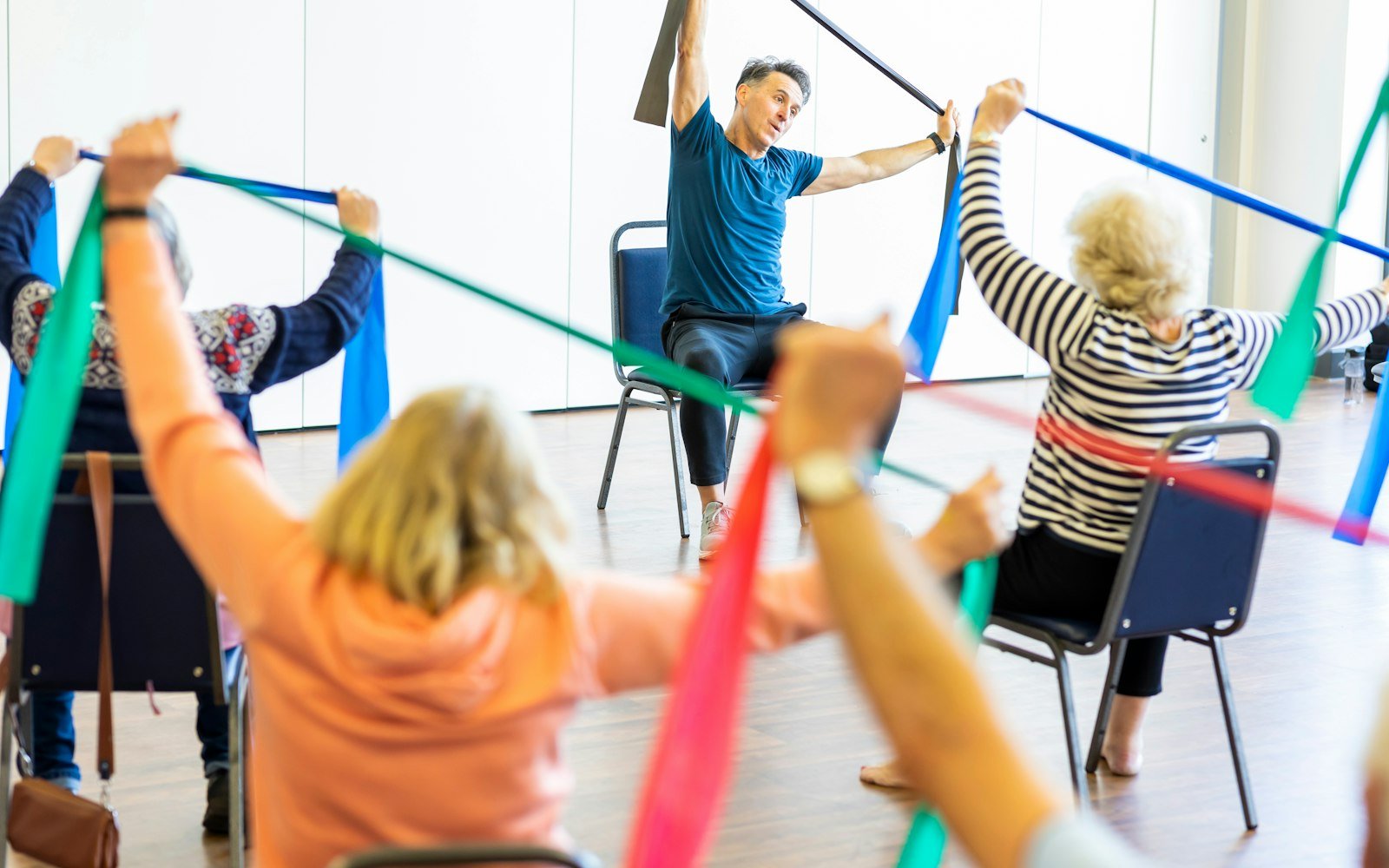
    • chair-based
    • no experience needed
    • affordable
    • adapted to each person

    Working together

    The project aims to complement what community centres, care workers and health professionals already do, not to replace it. It fills a gap in the existing network, so that gentle movement becomes one more part of the support people already receive.

    Let’s work together

    Are you part of a community centre, a neighbourhood house, a care organisation or a support group, and would you like to offer gentle yoga to the people you work with? Read more on the For community centres page, or get in touch – I would be happy to talk about what could work for your group.

    Sources

  • Gentle Yoga for Stiff Joints and Aching Backs: How It Helps the Ageing Body

    Gentle Yoga for Stiff Joints and Aching Backs: How It Helps the Ageing Body

    What changes in the body as we age

    As we get older, muscles slowly lose strength and mass (sarcopenia), joints can become stiff or arthritic, bones may lose density (osteoporosis), and balance gets weaker, which raises the risk of falls.

    How gentle yoga helps

    Slow movement keeps joints mobile and helps circulate the fluid that nourishes cartilage. Holding positions builds muscle strength around the joints, and weight-bearing standing poses support the bones. Balance work trains the body’s sense of position, and calm breathing lowers stress, which can reduce how intensely pain is felt.

    Research suggests that yoga can modestly help with chronic low back pain and knee osteoarthritis, and can improve balance in older adults.

    Five chair-based exercises to try

    All of these can be done sitting on, or holding on to, a sturdy chair:

    • Seated cat-cow – mobility of the spine, eases back stiffness
    • Seated knee extensions – strengthens the thigh muscles that support the knees
    • Sit-to-stand from a chair – leg strength, independence in daily life
    • Heel raises holding the chair – calf strength and balance
    • Shoulder rolls and gentle neck stretches – relieves tension in the neck and shoulders

    Safety first

    Move slowly, never into pain, and breathe normally. People with osteoporosis should avoid deep forward bends and strong twists. If you have had a hip or knee replacement or a recent injury, check with your doctor or physiotherapist before you start.

    Come and try a class

    You don’t need to be flexible or sporty to start – just curious. Our gentle classes are built around chairs, support and a relaxed pace, so everyone can join in. Have a look at our classes or get in touch: we would love to welcome you.

    This article is for general information only and does not replace medical advice.